
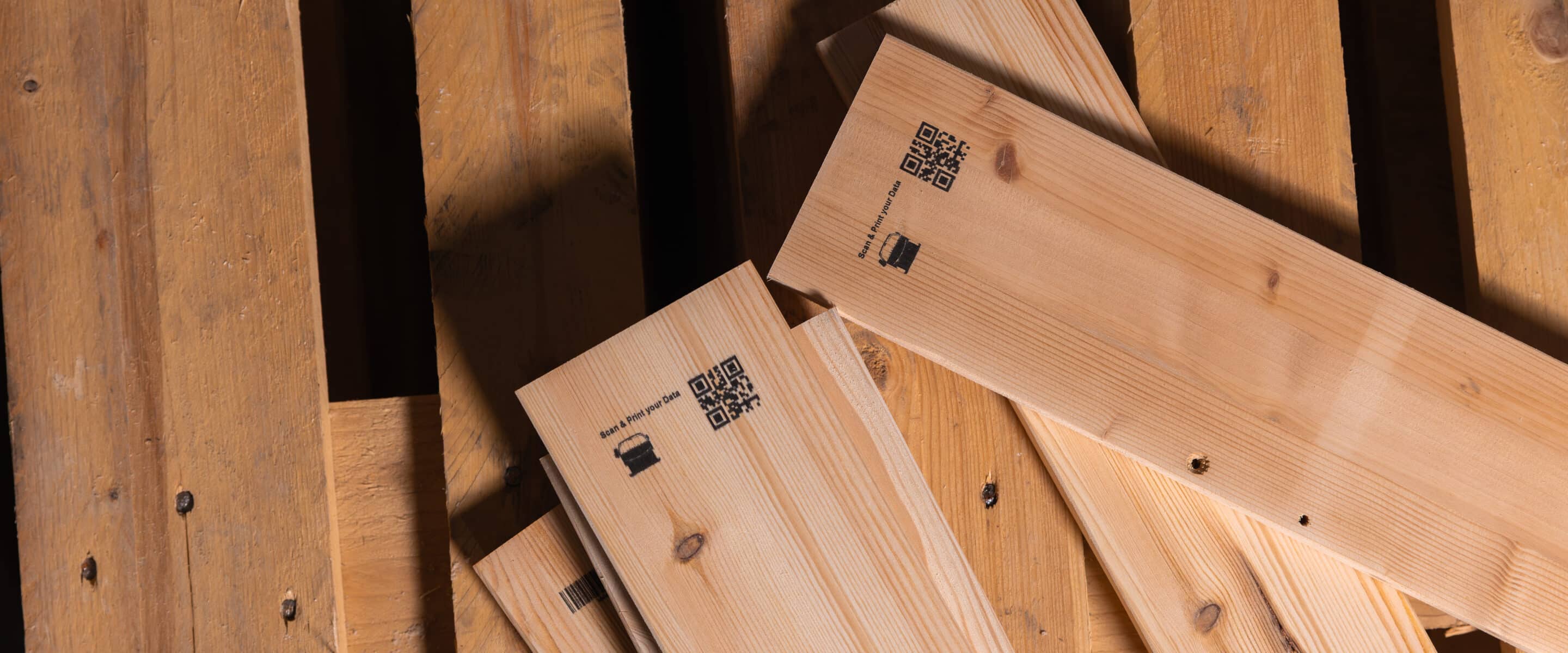
Why the PPWR is relevant for wooden packaging
Wooden packaging is an integral part of many industrial supply chains. It protects machines, components, products and goods during transportation, storage or export. At the same time, in future companies will have to be able to provide more precise evidence of which packaging is used, where it comes from and whether it meets the applicable requirements.
Key requirements of the PPWR will apply from August 12, 2026. Companies should therefore check at an early stage whether their packaging, labeling and documentation comply with the new requirements.
For wood packaging manufacturers, this means that even if their customers often have a greater formal obligation to provide evidence, the requirements have a direct impact on the packaging ordered. This is because packaging without clear labeling can become a compliance risk in the supply chain.
What role wood packaging manufacturers will play in the future
Machine manufacturers, industrial companies, logistics providers, exporters and other users of wooden packaging must be able to better document and allocate their packaging in future. To do this, they need traceable information along the supply chain.
In practice, the main issues are questions such as:
- Which manufacturer does the packaging come from?
- What type of packaging is it?
- Which batch, series or internal identifier is assigned?
- Is the packaging clearly identifiable?
- Can relevant information be verified quickly if required?
This makes wood packaging manufacturers an important building block in their customers' PPWR compliance. Those who already clearly label packaging make documentation easier for their customers and reduce queries later on in the process.
Which labels will become important in the future
Depending on the role and specific application, different information may be relevant. Markings that make packaging clearly identifiable and allow it to be assigned to the manufacturer are particularly important.
These include in particular
- Type, batch or serial numbers
- Manufacturer's name or trademark
- Postal address of the manufacturer
- QR codes or other data carriers to provide additional information
- Labeling for reusability, provided it is reusable packaging and the corresponding obligation applies
The labeling should be clear, understandable and permanently legible. Existing mandatory markings, for example IPPC or ISPM 15 markings, should not be covered or replaced, but should be sensibly supplemented.
It is important to note that the specific legal assessment depends on the packaging in question, the role of the company and the application. However, the label itself is a practical lever to significantly simplify traceability and documentation in everyday life.
Traceability: why physical marking helps
The PPWR strengthens the focus on the traceability and conformity of packaging. For companies, this means that information must be available, assignable and, in case of doubt, verifiable.
This information can be provided in different ways depending on requirements, for example:
- directly on the packaging
- via QR codes or other data carriers
- via accompanying documents
- via internal documentation systems
Clear physical marking directly on the wooden packaging makes this assignment much easier. It remains on the product, is visible in the warehouse or during transportation and can be linked to digital information.
This is a particular advantage for pallets, transport crates or reusable boxes: the packaging can be identified even if accompanying documents are not directly available or several packages are in circulation at the same time.
Why PPWR preparation is worthwhile for wood packaging manufacturers
Early preparation for the PPWR can bring several advantages for wood packaging manufacturers.
Ensure delivery capability
Customers will increasingly demand packaging that can be clearly documented and assigned.
Strengthening trust in the supply chain
Clear labeling reduces queries and facilitates coordination between manufacturer, customer, logistics and quality assurance.
Increase competitiveness
PPWR-compliant or PPWR-prepared packaging solutions may become an important selection criterion in the future.
Simplify processes
Serial numbers, QR codes and manufacturer information facilitate complaints, tracking, export processes and internal documentation.
Prepare reusable processes
In the case of reusable wooden packaging, clear markings can help to better organize circulation, ownership, condition and return.
Direct marking on wood: a practical solution
Wood is a robust but demanding material. Surfaces can be rough, uneven, absorbent or have different textures. At the same time, industrial markings must be easy to read, durable and simple to apply.
Direct marking on wood offers several advantages here:
- No additional labels
- No additional carrier materials
- No fixed installation necessary
- Flexible adaptation of changing data
- Labeling directly on the product
- Suitable for variable content such as serial numbers, batches, texts or QR codes
This makes direct marking particularly suitable for companies that want to mark wooden packaging flexibly, traceably and without additional materials.
jetStamp® 1025 as a tool for practical implementation
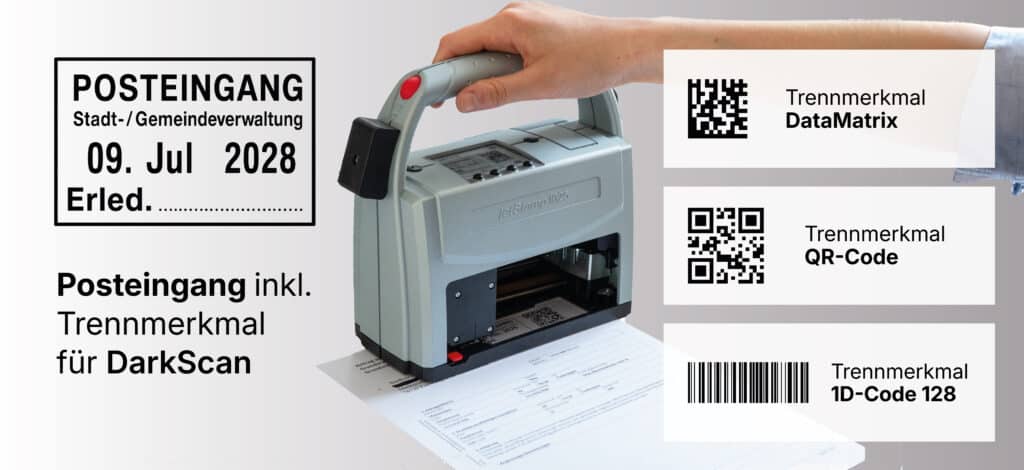
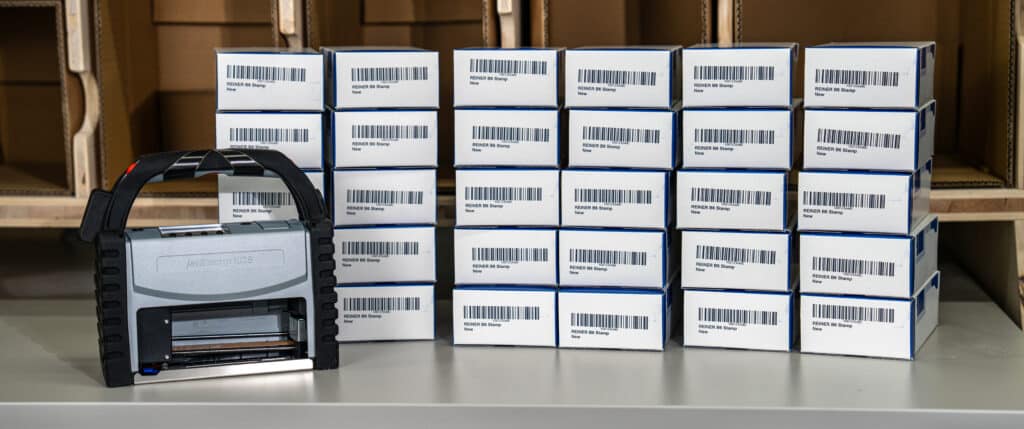
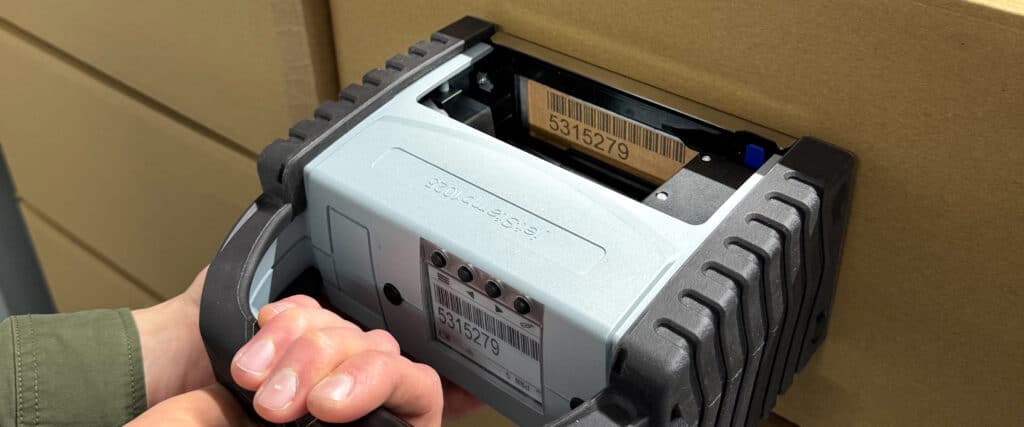
The jetStamp® 1025 does not replace legal or process advice. However, it is a practical tool for implementing required or helpful markings directly on wooden packaging.
With the mobile direct printer, variable content can be applied directly to wood, for example:
- Serial, type or batch numbers
- Manufacturer name and address
- QR codes for linking with digital information
- Supplementary information on traceability
- Additional markings next to existing IPPC or ISPM 15 markings
- Preparatory labeling for reusable processes
The advantage lies in the flexibility: content can be adapted without the need for new templates, branding stamps or labels. This is particularly helpful when data changes frequently or different types of packaging need to be labeled.
Comparison with alternative labeling methods
There are various methods for marking wooden packaging. Which solution is suitable depends on the application, the data, the surface and the desired process.
Branding or burning stamps
Branding stamps are suitable for fixed, recurring content. However, they are less flexible for changing data, serial numbers or QR codes.
Laser marking
Lasers can mark permanently, but are usually associated with higher investment costs, safety requirements and stationary processes.
Labels
Labels are easy to use, but can lose adhesion on wood depending on the surface, weather and transportation conditions.
Metal or tin sign
Signs are robust, but involve additional material, assembly work and less flexibility with changing data.
The jetStamp® 1025 is a flexible direct marking system: mobile, variable and without additional materials.
Prospects for wood packaging manufacturers
The PPWR does not only affect large brand manufacturers or retailers. It is changing the requirements along the entire packaging supply chain. Wood packaging manufacturers can play an active role here at an early stage.
Those who clearly label their packaging not only provide a means of transportation, but also support customers with traceability, documentation and process reliability.
That creates:
- More planning security
- Better traceability
- fewer queries
- Simpler documentation
- stronger customer loyalty
Cleanly labeled wooden packaging can be a decisive advantage in the future, especially for customers in industry, mechanical engineering, export and logistics.
Conclusion: Prepare labeling and documentation now
The PPWR is permanently changing the way packaging is handled. Wooden packaging is also coming more into focus because traceability, documentation and clear identification will become more important in the future.
It is therefore worthwhile for wood packaging manufacturers to check at an early stage how packaging can be clearly labeled and relevant information provided. Those who prepare suitable processes now will support their customers in implementing new requirements and strengthen their own position in the supply chain.
Would you like to label wooden packaging such as pallets, crates or reusable transport boxes directly? We will be happy to advise you on suitable solutions for your application.



 German
  English
  French
  Spanish