
Print PPWR labeling directly on packaging
Reduce documentation efforts, simplify conformity assessment, and reduce variant complexity.
An adhesive label is an additional component of the packaging system. Label material, adhesive, and printing ink must therefore be considered and documented together with the packaging. With direct printing, this separate label is not required: the ink is applied directly to the existing packaging surface. The finished, printed packaging—including the specified ink application—is evaluated. For selected REINER inks, statements regarding substance restrictions in accordance with Article 5 of the PPWR are available. Whether your finished printed packaging meets the respective PPWR requirements must be assessed on a case-by-case basis.
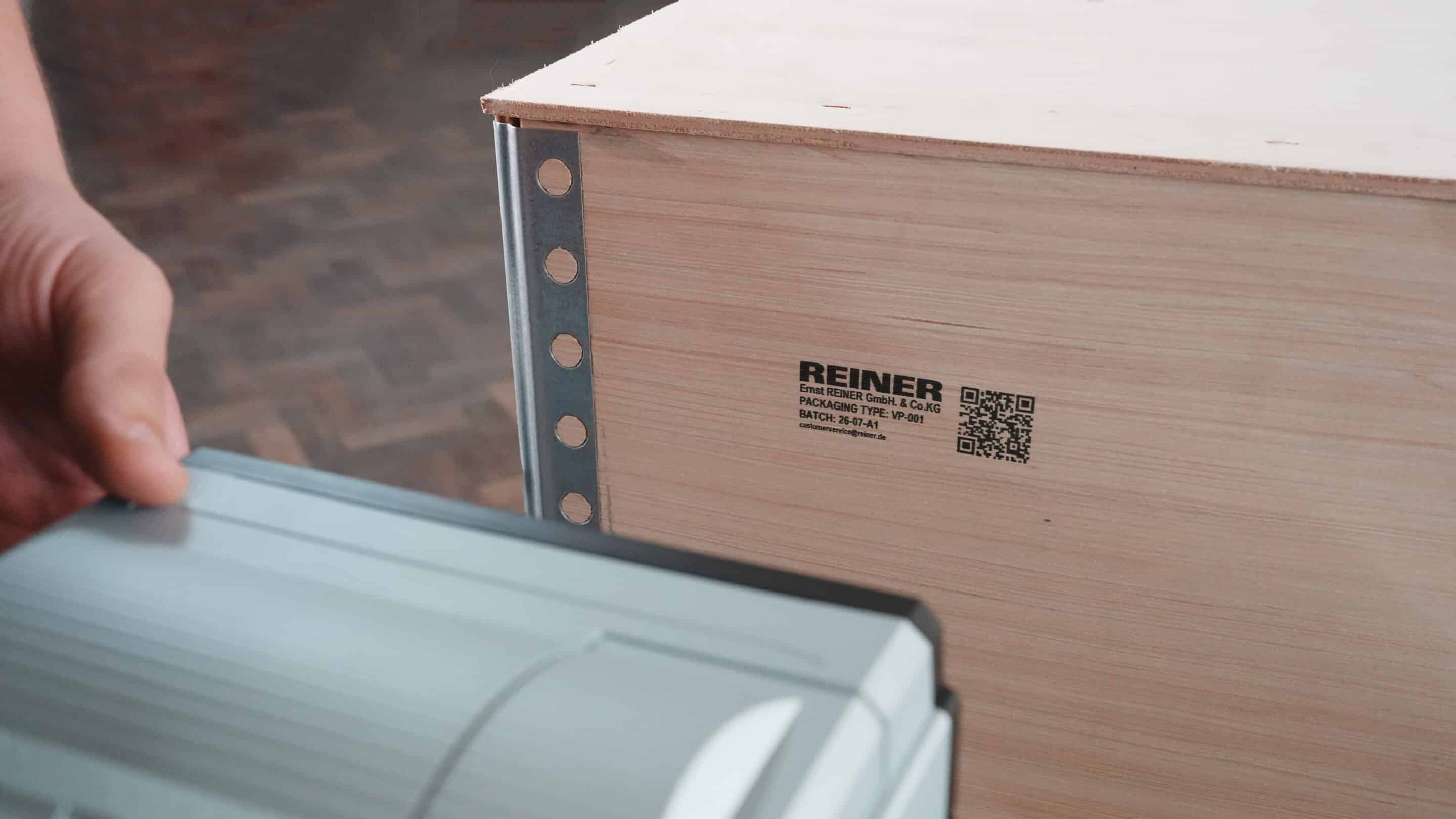
How does the PPWR change packaging and labeling requirements?
Overview of Requirements
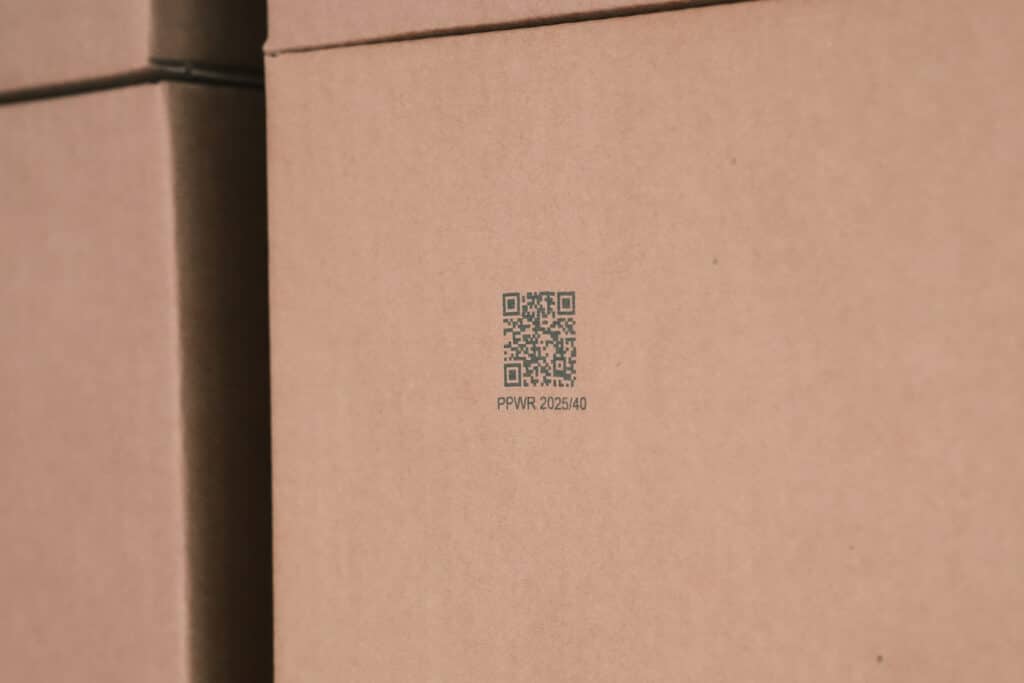
The PPWR takes a more holistic view of packaging as a system. For conformity assessment, the materials and components used must be documented in a traceable manner, and the applicable requirements must be taken into account.
An additional label entails additional materials and components that must also be evaluated and documented.
Typical requirements
- Assess packaging, including its components, for compliance
- Document the materials and packaging components used
- Take into account substance restrictions, such as those under Article 5
- Evaluate Recyclability and Design for Recycling
- Consolidate supplier, material, and compliance information
- Prepare the required technical documentation
Typical challenges
- Additional materials and material combinations
- Additional data on materials, suppliers, and components
- Evaluate the interaction between the label and the packaging in terms of recyclability
- Different packaging materials may require different label and adhesive solutions
- Changes to the label, adhesive, or packaging may require the documentation to be reevaluated and updated
What information can be printed directly on packaging?
Use cases from practice

Model, Lot, and Serial Numbers
Print variable identification data directly onto packaging—flexibly tailored to the product, batch, or production order.
Product and Producer Information
Integrate manufacturer, contact, and product information directly into the print layout.
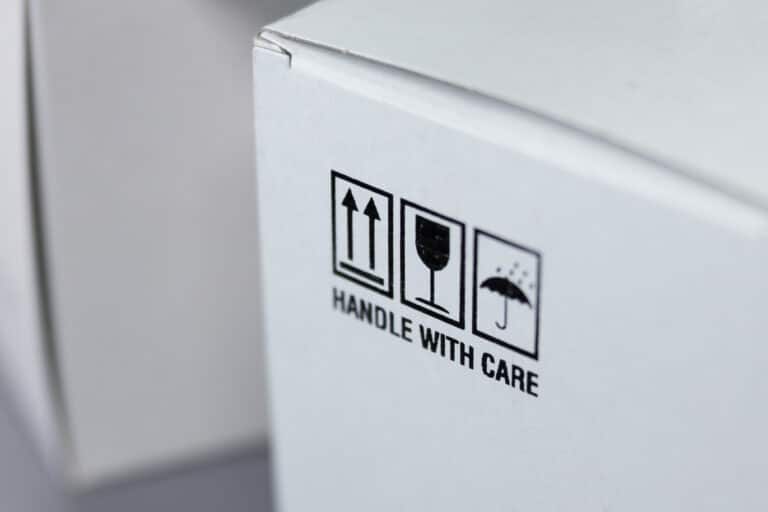
Material Labeling and Sorting Instructions
Print material information, symbols, and sorting instructions on appropriate packaging, provided they are intended for that specific packaging.
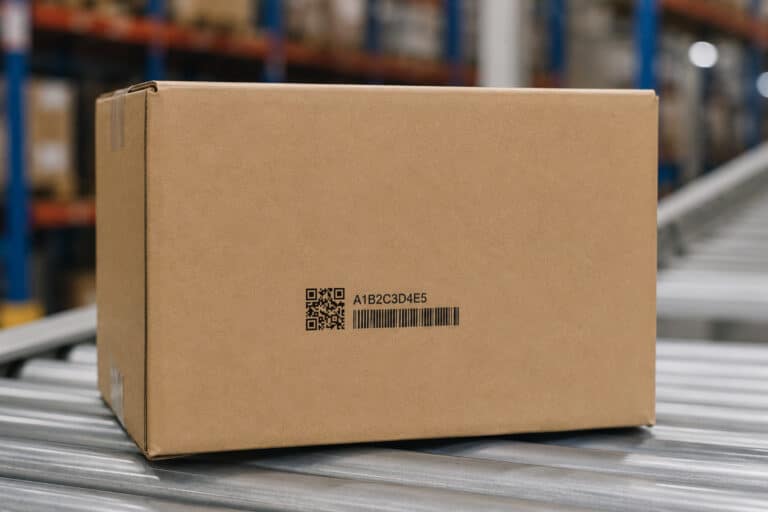
Barcodes, QR codes, and digital information
Apply machine-readable codes directly to products for identification, traceability, or additional digital information.
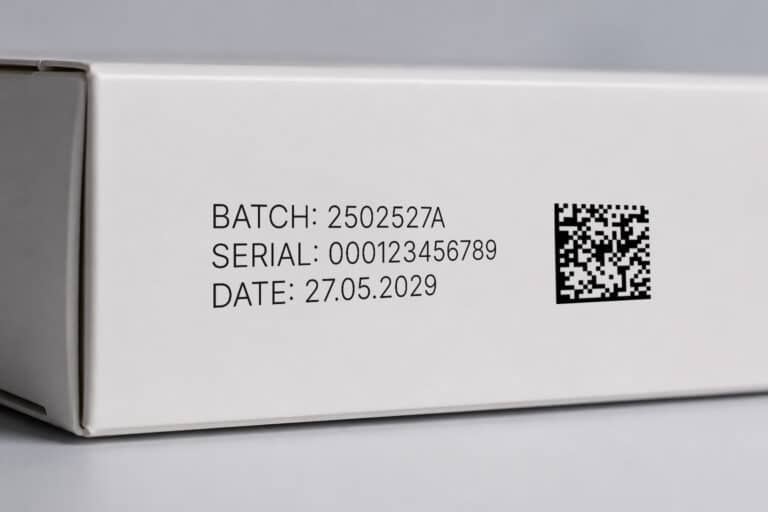
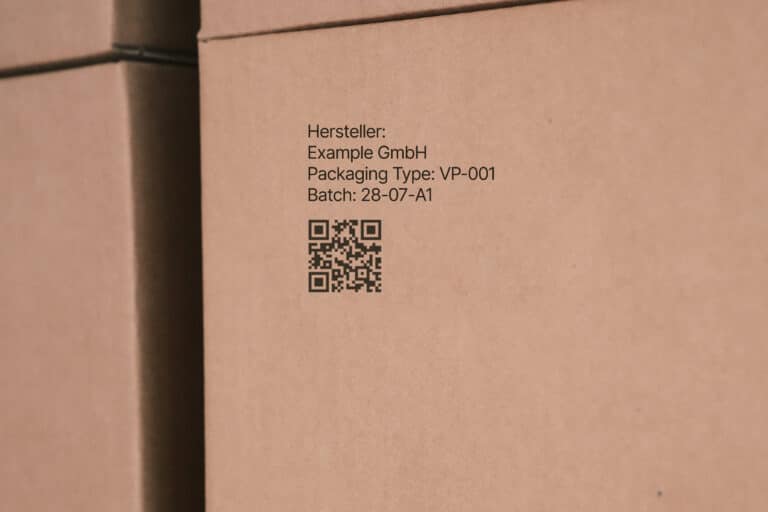
PPWR Labeling Comparison: Label or Direct Printing?
A Comparison of Direct Printing Methods
When dealing with different packaging formats, materials, and varying print content, ease of managing and documenting the labeling plays a role alongside PPWR compliance assessment. Direct printing does not replace every label. If a label also serves an additional function—for example, as a closure or security feature—the application must be considered separately.
Labeling System
Direct printing with REINER
separate marking medium
Labeling directly on the packaging
The label format, material, and adhesive must be compatible with the packaging
Ink is selected based on the application
Different packaging materials may require different label and adhesive solutions
A suitable ink can be used on various packaging materials
Changes may require new label variations
Print content can be customized digitally
Additional label variants must be procured, stored, and managed
Variable content without separate label stocks
Label construction and material combinations must be documented
A defined ink application can be documented
Direct Printing Under the PPWR: What Needs to Be Reviewed?
For reliable print results
Whether direct printing is suitable for a particular type of packaging depends primarily on the interaction between the packaging material, the ink, and the printed image. We test this exact combination on your original material.
Relevant PPWR Aspects
Article 5 – Substance Restrictions
Statements regarding substance restrictions under Article 5 of Regulation (EU) 2025/40 are available for the REINER S3-BK, MP3-BK, MP4-BK, and MP6-YE inks.
Article 6 – Recyclability / Design for Recycling
Ink application is also taken into account when assessing the recyclability of the finished printed packaging.
Article 15 – Obligations of Manufacturers
Manufacturers must ensure that the required conformity assessment and technical documentation are in place.
Source: Regulation (EU) 2025/40 on Packaging and Packaging Waste (PPWR), EUR-Lex
What We Review
- Packaging materials and compatible ink
- Adhesion, Readability, and Scannability
- Print image, position, and application in the process
A test print on your original material will show whether the packaging, ink, and print image are technically compatible.
Real-world example: variable data without an additional label
From the field
A shipping carton needs to be labeled with varying lot numbers, product information, and barcodes. Instead of first printing this data on a separate label, it can be applied directly to a suitable surface on the carton using a mobile jetStamp®.
result
- No separate label material is required for this information
- No label liner
- Variable print data can be flexibly customized
- Barcode and batch information in a single print image
- Labeling directly at the packaging station
Direct printing simplifies processes when variable information is printed without additional
can be applied to a packaging component.
We determine whether direct printing is suitable for a particular type of packaging by testing the original material, ink, and desired print design.
Labeling in practice
Success in the Field
Frequently asked questions
FAQ
Does direct printing result in an additional packaging component?
In direct printing, the ink is applied directly to the existing packaging material. No separate packaging element, such as a label, is created. Nevertheless, the ink application must be taken into account in the overall evaluation of the packaging.
Are labels prohibited under the PPWR?
No. The PPWR does not prohibit labels in general. However, as a separate packaging component, they must be considered in conjunction with the packaging, the materials used, and the intended recycling process. Where a label contains only information, direct printing may be an alternative.
Which labels can be replaced by direct printing?
Direct printing is particularly well-suited for variable information such as batch numbers, best-by dates, serial numbers, barcodes, or logistics details. Labels with additional functions—such as those used as closures or security features—cannot be easily replaced.
Which REINER inks are documented for PPWR-related packaging labels?
For black inkjet inks P5-S3-BK, P5-MP3-BK, and P5-MP4-BK as well as for the yellow inkjet ink P5-MP6-YE REINER has issued statements regarding the substance restrictions under Article 5 of Regulation (EU) 2025/40. The scope of each test is documented in the statement. Whether the ink is suitable for a specific packaging surface should also be verified by means of a test print.
Is packaging printed with REINER inks automatically PPWR-compliant?
No. These statements refer to the ink used and do not replace an assessment of the fully printed packaging. To ensure compliance with the PPWR, the relevant requirements for packaging, labeling, and use must be taken into account and documented.
Which types of packaging can be printed on directly?
Depending on the surface and the ink used, materials such as cardboard, paper, select plastics, and films can be printed on. A test print should be performed on the actual material before use.
When do the PPWR requirements take effect?
The PPWR generally takes effect as of August 12, 2026. However, specific requirements—including certain labeling, recycling, and reuse regulations—are subject to their own transition and implementation deadlines. Companies should therefore determine which requirements will apply to their packaging and when.
What documentation does REINER provide for its inkjet inks?
For inkjet inks P5-S3-BK, P5-MP3-BK, P5-MP4-BK, and P5-MP6-YE Separate REINER PPWR statements are available. These contain details on the specific substance restrictions under consideration and are based on information provided by raw material suppliers as well as REINER’s current knowledge. They can assist customers in evaluating their printed packaging.
Does the direct ink print constitute a separate component of the packaging?
A print produced by a REINER device is applied directly to an existing packaging component. It does not constitute a separate packaging component—such as a label—but should be considered a limited application of ink on the existing packaging material.
On which packaging materials can PPWR-related information be printed?
Direct printing is possible on a variety of packaging materials. For PPWR-related information, suitability depends on the specific surface, its properties, the ink used, and the requirements for adhesion and durability. Therefore, the desired combination of material, ink, and marking device should be tested in advance using a print test.
Does direct printing result in an additional packaging element?
In direct printing, the ink is applied directly to the existing packaging surface. Unlike with an adhesive label, no separate packaging element is created. However, the ink used and the printed image must still be taken into account when evaluating the finished, printed packaging.
Does direct printing result in an additional packaging component?
In direct printing, the ink is applied directly to the existing packaging material. No separate packaging element, such as a label, is created. Nevertheless, the ink application must be taken into account in the overall evaluation of the packaging.
Are labels prohibited under the PPWR?
No. The PPWR does not prohibit labels in general. However, as a separate packaging component, they must be considered in conjunction with the packaging, the materials used, and the intended recycling process. Where a label contains only information, direct printing may be an alternative.
Which labels can be replaced by direct printing?
Direct printing is particularly well-suited for variable information such as batch numbers, best-by dates, serial numbers, barcodes, or logistics details. Labels with additional functions—such as those used as closures or security features—cannot be easily replaced.
Which REINER inks are documented for PPWR-related packaging labels?
For black inkjet inks P5-S3-BK, P5-MP3-BK, and P5-MP4-BK as well as for the yellow inkjet ink P5-MP6-YE REINER has issued statements regarding the substance restrictions under Article 5 of Regulation (EU) 2025/40. The scope of each test is documented in the statement. Whether the ink is suitable for a specific packaging surface should also be verified by means of a test print.
Is packaging printed with REINER inks automatically PPWR-compliant?
No. These statements refer to the ink used and do not replace an assessment of the fully printed packaging. To ensure compliance with the PPWR, the relevant requirements for packaging, labeling, and use must be taken into account and documented.
Which types of packaging can be printed on directly?
Depending on the surface and the ink used, materials such as cardboard, paper, select plastics, and films can be printed on. A test print should be performed on the actual material before use.
When do the PPWR requirements take effect?
The PPWR generally takes effect as of August 12, 2026. However, specific requirements—including certain labeling, recycling, and reuse regulations—are subject to their own transition and implementation deadlines. Companies should therefore determine which requirements will apply to their packaging and when.
What documentation does REINER provide for its inkjet inks?
For inkjet inks P5-S3-BK, P5-MP3-BK, P5-MP4-BK, and P5-MP6-YE Separate REINER PPWR statements are available. These contain details on the specific substance restrictions under consideration and are based on information provided by raw material suppliers as well as REINER’s current knowledge. They can assist customers in evaluating their printed packaging.
Does the direct ink print constitute a separate component of the packaging?
A print produced by a REINER device is applied directly to an existing packaging component. It does not constitute a separate packaging component—such as a label—but should be considered a limited application of ink on the existing packaging material.
On which packaging materials can PPWR-related information be printed?
Direct printing is possible on a variety of packaging materials. For PPWR-related information, suitability depends on the specific surface, its properties, the ink used, and the requirements for adhesion and durability. Therefore, the desired combination of material, ink, and marking device should be tested in advance using a print test.
Does direct printing result in an additional packaging element?
In direct printing, the ink is applied directly to the existing packaging surface. Unlike with an adhesive label, no separate packaging element is created. However, the ink used and the printed image must still be taken into account when evaluating the finished, printed packaging.
{acf_anwendung_cta_h2_heading}
{acf_anwendung_cta_text}
Suitable materials for this application
Suitable Surfaces
Whether packaging can be printed on directly depends on the surface, the ink used, and the requirements for the printed image. We’ll determine the appropriate combination by performing a test print on your original material.



 German
  English
  French
  Spanish