

What does industrial labeling mean?
Industrial marking refers to the marking of products, packaging or components with information that is necessary for identification, traceability or internal processes. It is an integral part of modern production, logistics and commercial processes and is encountered in almost all industries - often inconspicuous, but indispensable.
Typical markings are, for example, texts, dates, barcodes or 2D codes that are applied directly to a product or its packaging.
Why is industrial labeling important?
In many companies, labeling is far more than just mandatory information. It fulfills central functions along the entire value chain:
- Identification: Products, components or packaging can be clearly assigned.
- Traceability: Batches, production data or times can be documented.
- Information: Content such as article numbers, best-before dates or codes are available directly on the product.
- Process reliability: Clear labeling reduces errors in storage, shipping or further processing.
Without reliable labeling, processes quickly come to a standstill - especially with changing products, small series or manual work steps.
What types of industrial labeling are there?
Different marking methods are used depending on the application, material and process. Basically, these can be divided into two main groups:
Labeling with labels
Pre-printed or individually printed labels are applied to products or packaging. This process is widely used, but reaches its limits when surfaces are uneven, very small or subject to heavy wear.
Direct labeling
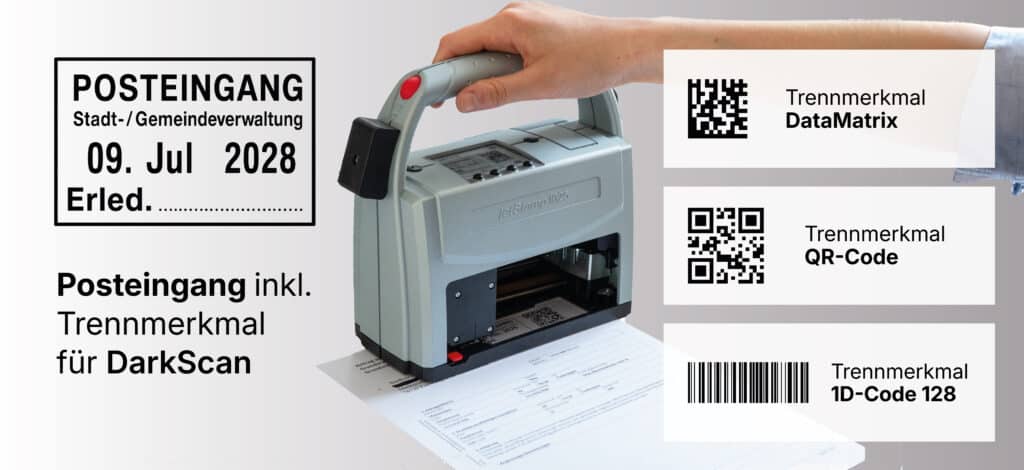
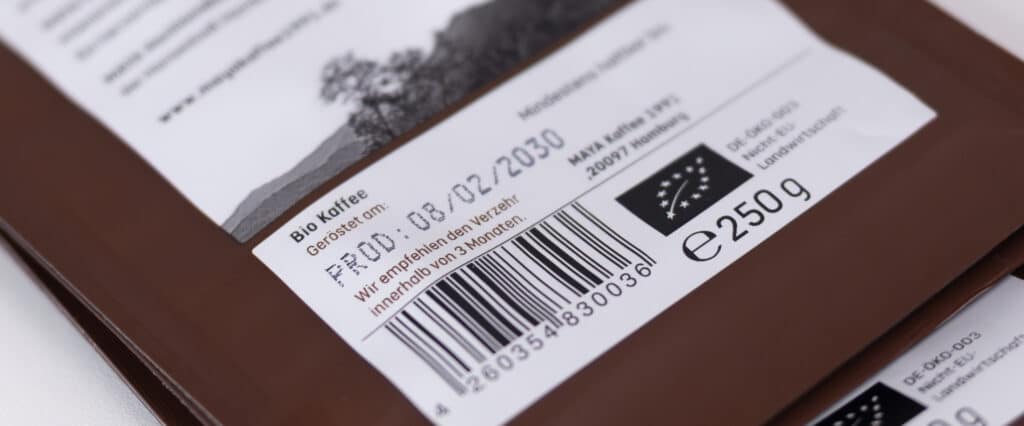
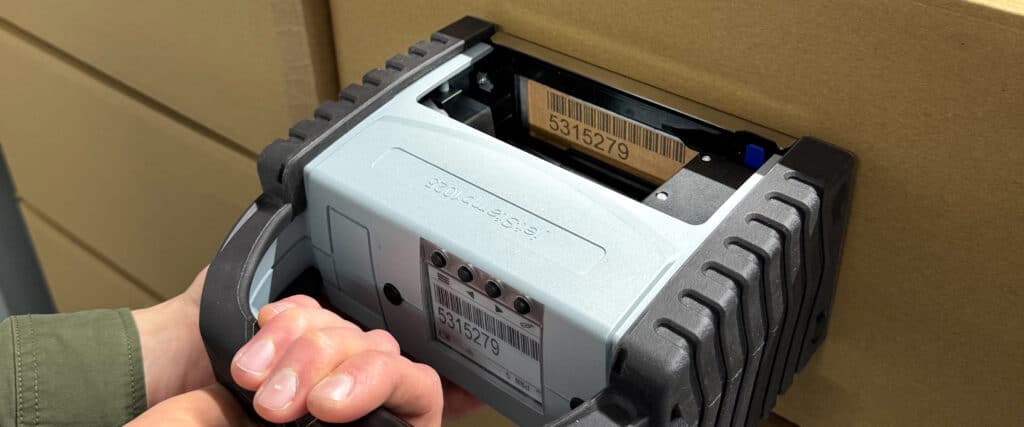
With direct marking, information is printed or marked directly onto the product or packaging without a label. This includes direct inkjet printing, laser marking or embossing processes. The advantage: less material, fewer work steps and more flexibility.
What is meant by direct printing in labeling?
With direct printing, texts, codes or variable content are applied directly to the respective object - without a carrier material such as labels. The process is particularly suitable for applications where content changes frequently or needs to be adapted flexibly.
Direct printing is often used when:
- Labels adhere poorly
- little space is available
- variable data are required
- Processes are to be simplified
You can find a detailed explanation in our blog article „Direct printing in industrial coding and marking“.
Mobile or stationary labeling - what's the difference?
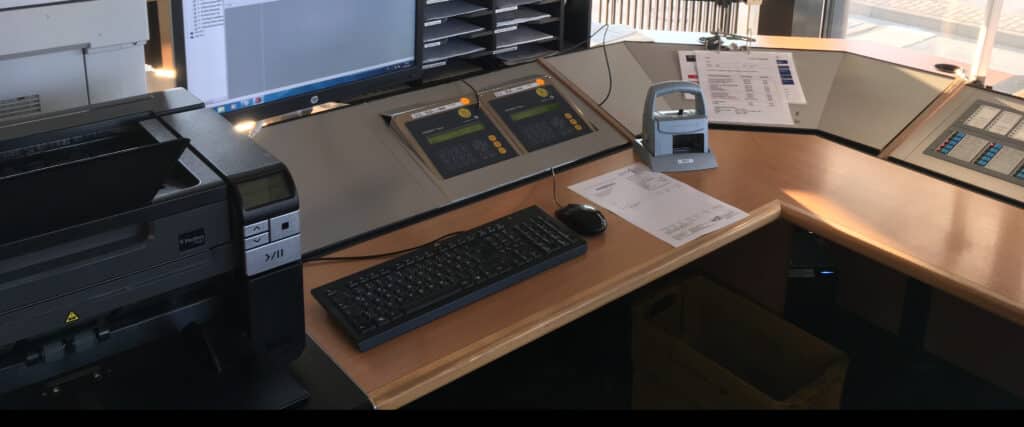
Many marking solutions are permanently integrated into production lines. This makes sense for high quantities and consistent processes. In practice, however, there are numerous situations in which a fixed installation is not possible or economical.
Mobile labeling
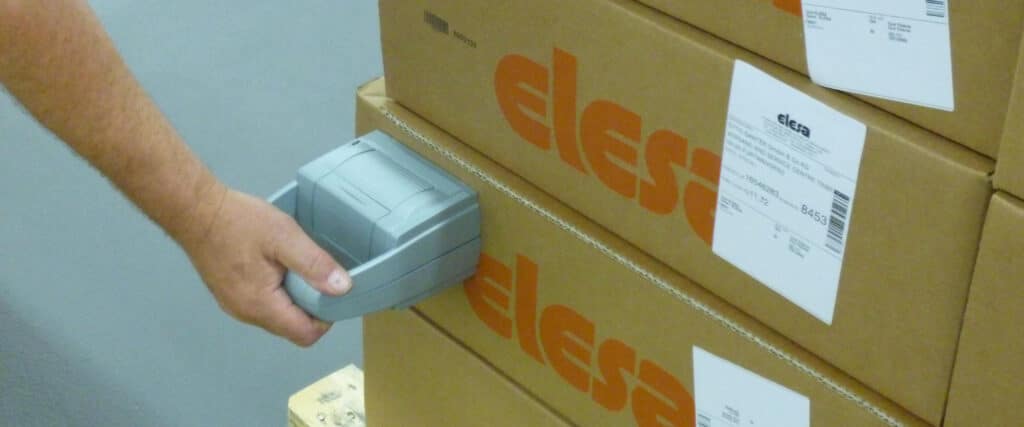
Mobile marking solutions make it possible to mark products or packaging directly on site - independently of a production line. This is particularly helpful for:
- small series
- Special orders
- Post-labeling
- changing locations
Mobile devices offer a high degree of flexibility here, without the need for complex conversions.
What information is labeled industrially?
Depending on the application, different contents can be applied, for example:
- Texts and article numbers
- Date and time information
- Consecutive numbers
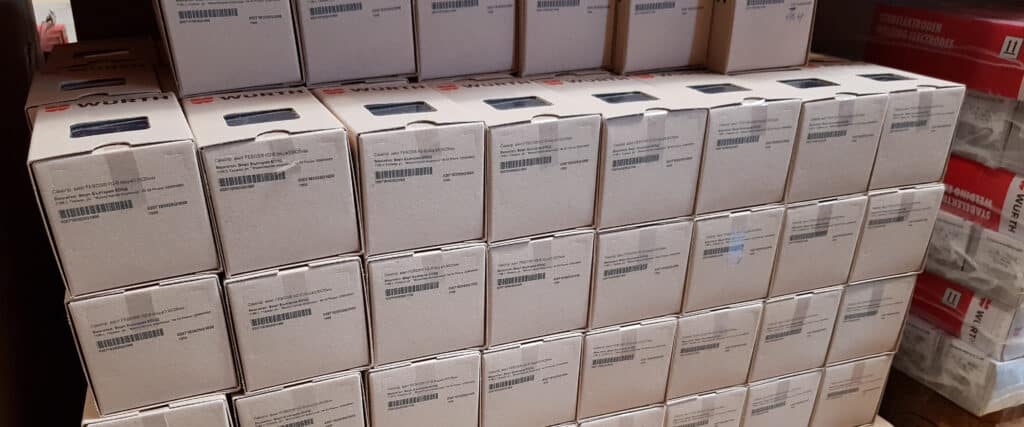
- 1D barcodes (e.g. Code 39, Code 128)
- 2D codes (e.g. QR code, DataMatrix)
The selection depends on the respective process, the legal requirements and the systems used.
In which sectors is industrial labeling used?
Industrial marking is relevant across all industries. Typical areas of application include
- Industry & Manufacturing
- Logistics & Shipping
- Trade
- Food environment
- Craft & special production
Wherever products need to be clearly identifiable or information is required directly on the product, labeling plays a central role.
Conclusion: Labeling as a flexible process module
Industrial labeling is not an end in itself, but an important part of efficient and safe processes. The right labeling solution always depends on the specific application - material, content, quantity and location.
Today, modern labeling means above all: flexible, adaptable and process-oriented. This is exactly where modern direct and mobile marking solutions come in.



 German
  English
  French
  Spanish